Sunday, May 07, 2006

Tamil Nadu Elections - Shameful Scenes

In a democracy, elections are not merely about choosing representatives and deciding which party should be entrusted with the responsibility for governance. Elections are also about political education and determining priorities for the future. But over the decades, most parties in India have failed to utilise elections as a means of mobilising public opinion to obtain a mandate for meaningful change. Instead, elections have become a way of determining who will rule.

Over the years, cynical and shameless manipulation of the poor and powerless voters through competitive populism has become the dominant feature of our elections. The current Tamil Nadu Assembly election has shown that this process of manipulating the vote has reached the nadir. The DMK-combine promised colour televisions to each family!

This is by no means the first time when a party offered freebies to the unsuspecting and hapless poor. Most candidates habitually offer money and liquor for vote. And since the early 1970s, politicians have perfected the art of using public money as inducement for vote. Ostensibly, all these promises are intended to eliminate poverty.

But the gullible poor remain as vote-banks and no significant dent is made in poverty. The Garibi Hatao politics of the 1970s and the populist policies of NTR and MGR are good illustrations of the poor becoming an assured vote bank, even as their condition remains largely unaltered. The absurd campaign of Devi Lal in Haryana in 1987 marked a new low, when he promised to give irrigation water without “depleting the power in it,” as opposed to the Congress which allegedly generated hydro-electricity before allowing it to flow into irrigation canals! Devi Lal again hit headlines in 1989 by promising to write off farm loans. The loan waiver was eventually implemented by VP Singh’s government in 1990. The credit system suffered irreparable damage, and farmers continued to be in distress after the loan waiver.

The politics of free electricity has dominated our electoral landscape for long. Several states resorted to this, including the present Congress government in Andhra Pradesh. Farmers continue to pay huge bribes for new connections or services, power supply is erratic and utilities suffer serious losses, at great cost to the taxpayer. And yet, the cynical governments resorting to such short-term ploys reap rich political dividends.

But all these pale into insignificance in the face of the brazen DMK promise to give colour television sets. By this reckless promise, the sovereign voters are converted into mendicants. The tragic death of several poor women while distributing free saris in Lucknow in 2004 forever reminds us how the voter has been reduced to a beggar. But Mr Karuna-nidhi now seeks to institutionalise such mendicancy. In such political calculations, people are not human beings with dreams and aspirations, dignity and pride. They are reduced to being voters whose compliance is necessary for the power of a few manipulators.

When poll promises are always made with an eye on the votes, what is wrong with Mr Karunanidhi’s promise? Because, this time by offering colour TV sets, the politicians have crossed the Rubicon.

Most of the subsidies and freebies offered by parties so far can be justified on the ground that they were meant to help fulfill potential or prevent suffering, or support the weak and vulnerable. But colour television sets cannot be justified on such grounds by any stretch of imagination. That is why Mr Karunanidhi’s promise has implications beyond Tamil Nadu and this election.

If such a reckless electoral tactic goes unpunished or unchallenged, who knows what tomorrow will bring? In a future election, a party may offer free motorcycles, another will promise refrigerators to all and a third will give motorcars! And why not guarantee a hundred bottles of free liquor annually to every family? And all this, with public money. This will certainly bankrupt the treasury. The election will go to the highest bidder. Once such promises are honoured, nothing much more can be done. Education may be in a perilous state, denying poor children an opportunity to enlarge their horizon and acquire skills; we may have more televisions than toilets, and people may suffer indignity, humiliation, in-convenience and ill health on account of public defecation; and public health may be in shambles, forcing millions into sickness and debt trap. But once people get televisions and scooters, the state does not have resources to do the things that it ought to do.

Therein lies the real tragedy. The state is ready and willing to do what it need not, or ought not to do, at the cost of its essential functions. Poverty is perpetuated and millions remain as vote banks, seeking alms and freebies that will never improve their condition. The netas and their families, of course, continue to thrive in the ‘service’ of the people. The servant becomes the master, lording over people, and the sovereign citizens become mendicants, propping the political fortunes of a few individuals and their kith and kin.

This must stop. If the parties have any sense of shame and spirit of public service left in them, they must come together to put an end to this culture of mendicancy. The media, busy peddling the week’s sensation, must rise above the mundaneness of daily occurrences, and mobilise public opinion to reshape politics. The time is now, before all parties subvert our democracy fully and public office becomes the preserve of the highest bidder.


D-8 Summit

The Islamic world has responded to the globalizing changes at inward-oriented and outward-oriented levels. At the first level some Islamic states joined other multi-lateral globalizing institutions with a view of benefiting from them. At the second level, the main inter-governmental institution of the Islamic world – Organisation of Islamic Countries, brought about some significant changes in its agenda and attempted to establish a dialogue with the West. However D-8 or Developing – 8 was structured not as an organization, but as a mechanism for development of cooperation among, Islamic countries from regions stretching from South East Asia to Africa. It was on 10 June 1997, the heads of state of the eight countries - Bangladesh, Egypt, Indonesia, Iran, Malaysia, Nigeria, Pakistan and Turkey - met in Istanbul and issued the “Istanbul Declaration” which represented the birth certificate of the D-8 Group. The idea of D-8 was mooted by Dr Necmetin Erbakan., the former Prime Minister of Turkey during a Seminar on “Cooperation in Development”, held in Istanbul in October 1996.

The main objective of D-8 to be socio-economic development in accordance with the following principles: Peace instead of conflict, Dialogue instead of confrontation, Co-operation instead of exploitation, Justice instead of double-standards, Equality instead of discrimination, Democracy instead of oppression. The principal organs of the D-8 are the Summit, the Council and the Commission. The Summit, which is the supreme body of D-8 is composed of heads of state / government of member states. It is convened every two years - the first summit in Istanbul in 1997, second summit in Dhaka in 1999, third in Cairo in 2001 and their recent summit in Tehran in 2004. Bearing in mind that the seven year long efforts to develop multifaceted cooperation among the eight countries did not produce much, the leaders has specified 10 fields of cooperation, each of which was entrusted to each member state. The fields and country coordinators are Trade (Egypt). Finance Banking, and Privatization (Malaysia), Manufacturing and Health (Turkey), Telecommunications and Information (Iran), Rural Development and Culture (Bangladesh), Agriculture including Aquaculture (Pakistan), Human resource Development and Poverty Eradication (Indonesia), and Energy (Nigeria).

May 2006 Summit at Bali:

The fifth summit of D-8 is scheduled to be held during May 9- 13, 2006 in Bali, Indonesia. Seven heads of state or government have been confirmed to attend the summit of eight developing countries (D-8). The D-8 summit is also expected to come up with a leaders' declaration on global issues, including peaceful use of nuclear power, agreements on preferential trade and pacts on administrative assistance on customs matters. The summit in Bali is expected to produce a Bali declaration and two cooperation agreements.


Deepened Disparities:

Although the achievements have increased the ability of the Islamic world to cope partially with some aspects of globalization, they have not been effective in bringing about a qualitative change in such ability. This is essentially because of various variables:

(i) Non-Homogeous: The Islamic world is not a homogeneous entity. It is divided along virtually all socio-economic and political lines of comparison including religious ones. All the countries participating to this initiative are members of other global or regional communities, and their economic and political priorities are intensified on other organizations. For Turkey, membership for the EU is the main goal of the foreign policy. For Pakistan, membership for Shanghai Cooperation Organization is essential (other than observer status).

(ii) Pressures from global powers: The Islamic world is deeply penetrated by ‘powers of globalization’. The economies and security models of the Islamic world are mostly influenced by the agenda of the Western powers. Eg, EU initiatives towards Mediterranean and some Middle Eastern and Gulf countries, on one hand generate a new understanding of trans-regional cooperation.

(iii) Rivalries and conflicts: Rivalries and conflicts among Islamic states over regional leaderships, and territorial issues are acutely clear in the case of West Asia. Iran and Turkey are members of ECO, but they compete in Central Asia. Understandably, Saudi Arabia did not join the D-8, as it seemed to compete with its own organization, the OIC.

(iv) Economic Disparity: Among the D-8 countries, Malaysia is one of the most developed and advanced countries in Southeast Asia. Turkey is considered one of the advanced countries of the Islamic world. On the other hand, countries like Iran and Nigeria, whose main income is from oil; and countries like Bangladesh and Pakistan, who, despite some changes in recent years, have not been able to improve living conditions.

(v) Geographical discontinuity: Apart from being sprinkled across disparate portions of Asia and Africa, D-8 countries also have widely different levels of economic growth. These countries do not have any geographical contiguity. They are separate pieces of land scattered all over the world, and it's not clear how these eight countries are going to form a sort of common market to promote economic development among themselves. The necessary ingredient is missing, and that is the geographical contiguity.

Wednesday, April 26, 2006

Tamil Nadu Elections

(Excerpts from a News Source)

No state in India has been quite the graveyard of confident predictions of psephologists and political commentators as Tamil Nadu. Time and time again, the voters in this vast province, dominated by not one but two regional nationalist formations, have upset the apple cart of the ruling party and the opposition formation alike.

Just two years ago, a tidal wave swept J. Jayalalithaa’s party off the electoral map during the general elections. Her strident attacks on “Sonia Maino” fell flat. More seriously, the government employees rebelled against her, alienated as they were by her action to break their strike only the year before the general elections. This proved critical as Tamil Nadu has the highest per capita ratio of government employees in India and they are a highly unionized work force. It includes school teachers and nurses, farm extension workers and day care centre workers.

The last minute tie-up with the Bharatiya Janata Party proved to be a non-starter, alienating the sizable religious minorities against her in a state where Christians and Muslims together make up 11 per cent of the electorate. To add to this, the Dravidian ideologues were railing against her, following the enactment of measures to block religious conversion and the ban on animal sacrifice in temples. It is an amazing turnaround; one rarely seen in recent times but the present election is poised at knife-edge. The Centre for the Study of Developing Societies survey went so far as to say that the polls in the state are “too close to call”. Despite a slender lead of two per cent in the vote share of the ruling All India Anna Dravida Munnetra Kazhagam- led alliance, the result could tilt either way. Irrespective of whether she loses or wins, the chief minister has made this a battle worth watching. Placed in perspective, she has converted a huge vote deficit of 2004 into a minor surplus. If this trend continues, she might even look forward to a simple majority for her own party with no crutches from her allies.

There have been similar contrasts in recent years between Lok Sabha verdicts and state assembly elections. In 1998, Digvijay Singh in Madhya Pradesh led the Congress to a second term in office though his party lost the subsequent Lok Sabha elections in the state. Lalu Prasad and his wife performed a similar feat in Bihar in 2000 a little less than a year after the general elections.

But there are two crucial differences in Tamil Nadu. One is a generational issue. This is almost certainly the last time M. Karunanidhi will lead the Dravida Munnetra Kazhagam, a party he has been a member of since its foundation in 1949, to battle. This may well prove to be his Achilles heel: his heir apparent and son, M.K. Stalin, lacks popular acceptance. This has forced the veteran to clarify publicly that he will be chief minister after his party wins at the hustings.

The other has been a significant feature of the Tamil Nadu polity for the last two years. Jayalalithaa has crafted her policies to defuse disaffection among the very sections that bolted from her party in 2004. The arrest of the sankaracharya of Kanchi was well publicized to reaffirm the belief that religious leaders were not above the law. Less publicity was given to rescinding the law on conversions, or to the expansion of the free meal scheme in temples to churches and dargahs. There was also a rapprochement with the powerful government employees’ unions.

The turning point came with the tsunami in December of 2004. Contrary to knee-jerk press reports specifically in the audio-visual media at the time, the state government handled itself with considerable alacrity and speed. A similar drill was in place during the floods the following year. Jayalalithaa’s opposition to the Sethusamudram project taps into genuine fears of the fisher folk about their livelihoods.

Jayalalithaa’s other masterstroke was the timing of the bicycle gifted to high school girl students. In her first hundred days in office, in 2002, she announced a programme to give a cycle to every Dalit girl. Two years ago, this was extended to all girl students in Class XI and XII. It is important to note that these students will comprise a significant chunk of first generation voters now that voting begins at the age of eighteen.

This is also perhaps the first time in many years that a chief minister is campaigning by highlighting her performance. The opposition is anxious enough to promise free colour television sets and rice at two rupees a kilogram to the poor. To be sure, the DMK has a formidable lineup of allies and is fighting hard. Its main bastions lie in north Tamil Nadu where its ally, the Pattali Makkal Katchi, is also strong. Further sources of support include the left and the Congress. Both are localized but in this contest every seat and vote will count.

History is testament that the incumbent usually loses power in Fort St George. In recent times, only the late M.G. Ramachandran managed the feat of never losing a single assembly poll. Yet the legacy of the past weighs equally heavily on the DMK. When E.V. Ramaswami Naicker announced that he was marrying in order to beget an heir, C.N. Annadurai founded the DMK as a revolt against the idea that power flowed through lineage. It is ironical that Karunanidhi’s own party now has a line of succession that runs from father to son.

It is here that the chief minister’s choice of allies shows a shrewd political mind. V. Gopalsami or Vaiko left the parent party in 1994 protesting against dynastic politics. He retains a thin layer of supporters across the state. Equally crucial are the Dalit Panthers, a militant party led by T. Thirumavalavan. This is the first time that a Dalit party has such a prominent role in a larger alliance. Both parties compete with specially tailored welfare measures for the poor and have their own blend of growth and welfare.

The choice is still a very important one. Five more years of the AIADMK will mean continuity, and this will shake up the UPA coalition. Karunanidhi is banking on the arithmetic of alliances to bring him back to power one last time. Its maths versus performance. This election looks like a cliffhanger though a come back for the ruling party may well be on the cards.

Monday, April 24, 2006

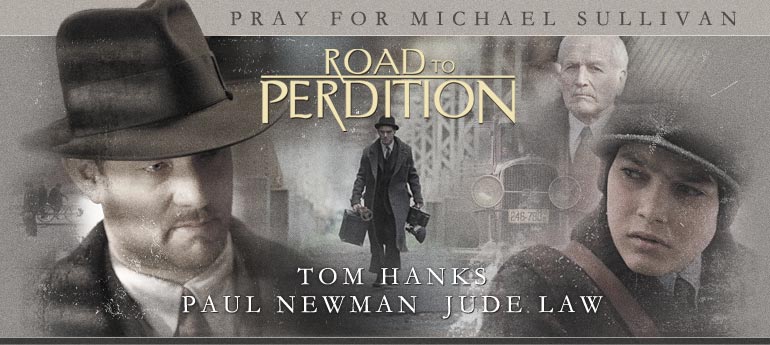
ROAD TO PERDITION

Perhaps it's difficult for you to get away with a week -end. This time I invested my week end by watching a Hollywood movie – ROAD TO PERDITION. This is a nice gangster movie, claims to be next best gangster movie after GODFATHER.


Michael Sullivan Sr. (Tom Hanks) is a trusted aide to John Rooney (Newman), an Irish American organized crime boss. Sullivan, an orphan and a soldier in the Great War, was adopted by the older man as a child, and he has been working with him ever since his teens. Rooney treats Sullivan as a surrogate son, being closer to him than his own son and heir, the vain and insecure Connor Rooney (Daniel Craig). Further frustrating Connor, his father treats Sullivan's two sons, Peter and Michael Jr. like grandchildren. At a wake of a former buisness associate, Michael Jr. and Peter notice the subtle friction between their father and Connor.

Sullivan senior and Connor are instructed by Rooney to deal with Finn McGovern, another employee of Rooney's whose brother was murdered by the Rooney organization as punishment for allegedly stealing from them. Unbeknownst to both Michael Sullivan and Connor Rooney, a curious twelve-year-old Michael Sullivan Jr. hides in the car and witnesses the ensuing scene where Connor, acting against his father's wishes, murders McGovern. The shocked Sullivan Sr. swears his son to secrecy, while John Rooney humiliates his son by demanding an apology for his seemingly hotheaded actions. Ostensibly to prevent the threat of Sullivan Jr. divulging the murder he witnessed (but in reality feeling jealous of and threatened by Sullivan Sr.), Connor, again against his father's wishes, attempts to have Sullivan murdered at the same time as personally killing his wife Annie and younger son Peter. Both Sullivan Sr. and Jr. survive the attempt on their lives and flee to Chicago.

When it becomes clear that Al Capone's crime syndicate will not countenance Sullivan's goal of taking revenge on the Rooneys, he develops an elaborate scheme to protect his son and to blackmail the mob into giving up Connor by robbing its secret accounts in banks throughout Chicago. Sullivan personally steals the 'dirty money' that Capone is holding, while Micheal Jr. provides his assistance in the getaway car. This way, Capone will give up Connor, in exchange for the money. Capone, however, is more upset at losing his money, and he will not make any bargains or deals with Sullivan at all. He sets up Harlen Maguire (Law), a voyeuristic, freelance photographer/hit man hired by the Capone organization, to complete the eradication of the Sullivans. Maguire has a habit of taking pictures of his dead victims, much to his pleasure.

It later becomes apparent that Connor has been embezzling money from his father, holding the money under the names of gang members that he has murdered. Confronted by Sullivan with the evidence that his son has been betraying him, John Rooney refuses to stop protecting Connor. He reminds Sullivan that, they too, are murderers, that this life they chose, and that "none of us will see heaven." Wanting his son to avoid traveling the road he has taken in life, Sullivan has a difficult decision to make. In order to gain revenge and protect his son, Sullivan must then kill the members of Rooney's gang, including John Rooney. He is then able to track down and avenge himself on Connor. Since Capone protected Connor because he was only Rooney's son, there was no more reason to hide him after his father was dead.

Subsequently, the psychopathic (and disfigured) Maguire succeeds in tracking down the Sullivans and murders Michael Sullivan senior at a beachside house in Perdition. Apparently, he traced a call placed from Sullivan to his wife's sister, Sarah, and he was able to determine that they were headed for the town of Perdition. Exactly how long he was there and what he did to Aunt Sarah is unknown, but, noting that he was cold blooded and there was no furniture in her living room, it is implied that he killed her before she could warn them, hid the body, and waited for his real prey. Michael has the opportunity to shoot Maguire but does not (Maguire is instead killed by the dying Sullivan Sr.), thus ensuring that Michael, at least, has a chance "to see Heaven".

Thursday, April 20, 2006

On FEDERALISM - G.L.Peiris

Professor Gamini Laksman Peiris

Former Minister of Justice, Constitutional Affairs & National Integration
The Democratic Socialist Republic of Sri Lanka

VENUE: School of International Studies, Jawaharlal Nehru University

How do you reconcile ethnic and cultural diversity with the concept of mature and cohesive nationhood? Certainly in South Asia this is a perennial problem. In many of our countries there are people who speak different languages, profess different religions, come from different cultural backgrounds. How do you construct political and economic institutions which enable this range of diversity to be readily compatible with the perception of belonging to a single country, without any element of exclusion from decision-making processes?

I think that is a central challenge facing many of the countries of the developing world.
In Sri Lanka we are experimenting with certain ideas which will enable us to devolve substantial power to different regions in the country. The whole thrust of this is empowerment of people; making it possible for them to play a more active and vigorous role in the making of decisions which touch their daily lives.

How do you do this within the framework of a single state? In Sri Lanka, as we proceed with this initiative we find ourselves facing a particular problem. We are told that if you look at the history of federalism in the world the typical model of federalism is that of regions coming together, regions that were earlier independent. But they come together for certain limited purposes. That has been the traditional pattern. Now, Sri Lanka, by contrast, has always been a unitary state. Federalism has not at any time been part of the political experience of my country.

What we are now contemplating is the changing of that unitary structure to admit of a degree of power-sharing, which is generally associated with quasi-federal structures. Now the question that is asked is: We're all familiar with the phenomenon of independent entities coming together within the framework of a federal state, but is it possible, is it feasible, to envisage a country which has always been a unitary state now adopting, as a result of a political process, quasi-federal structures and mechanisms? That has been a question which has been put to us, very pointedly, in the course of the constitutional initiative which is taking place at the present time in my country.

I need to tell you that one of the problems that we face here is an emotional problem. Not people being cerebral, reflective, thinking consciously about these matters, but an intuitive and emotional response to these very mixed and convoluted issues. The problem there is this: Many people feel, in our part of the world, that federalism is the precursor to the physical dismemberment, or the disintegration of the nation state. If you proceed in that direction the end result would be the break-up of a national state. Now many people are suspicious of federalism in our country. They are suspicious because they feel that this is the thin end of the wedge. Once you begin travelling in that direction how do you stop short of the physical disintegration of the state?

So it is the emergence and the consolidation of structures which have enabled people coming from a diversity of cultural backgrounds to feel at home in their respective nations. It is these mechanisms that have enabled the survival of these entities as unified countries. Now, that may be self-evident when you put the proposition in that way, but one has to overcome a high degree of emotion and convince people of the reality of that position. In doing so I think we have to jettison labels; nomenclature is not the most important thing. There are many countries in the world which do not fall neatly into this category of unitary or federal. There are hybrid structures. So I do not think that we should be slaves to stereotypes or to labels.

In my own country most of the problems are in the northern and the eastern regions where the majority of the people speak the Tamil language. That is, those are regions dominated by a minority. There is a similar situation in Canada, in Spain, and in other countries. Do you then solve the problem in this way: a duopoly approach that greater powers need to be devolved to those regions where the most acute problems arise in every day experience?

Now, in Sri Lanka we have found that one of the reasons why that approach is difficult is a degree of emotional resistance. If the majority feel that some kind of completely special and disparate treatment is meted out to a particular region, which is inhabited by a group of people who belong to the racial minority, then psychologically there's a high degree of resistance to the adoption of those models and structures. But whichever solution you adopt, symmetrical or asymmetrical, it is important to insist, in keeping with the contemporary Sri Lankan experience, that there must be power-sharing also at the centre.

Now the situation is complicated in a country like my own where the minorities do not live exclusively in a particular part of the country. They do live in the northern and the eastern provinces, but then there are large numbers of Tamil-speaking people who live in the capital city and its environs. So a viable structure cannot consist simply of the devolution of power to regions. You have to look at the problem of power-sharing at the centre and develop appropriate mechanisms to accomplish that objective.

Then there's this one other element that I need to refer to. These problems in our part of the world cannot be analyzed solely in terms of majority versus minority. What imparts a particularly complex dimension is the minority versus minority aspect. In Sri Lanka there are two minorities: there are the Tamils; there are the Muslims. So if in the northern and the eastern regions you devolve very substantial powers to the Tamil-speaking minority then the Muslims ask that their own fundamental rights be suitably entrenched by constitutional arrangements to prevent the Muslims from being overwhelmed by the Tamil community. So that is a dimension that we need to bear in mind.

It is also important, I think, to make the point that in our part of the world, certainly in South Asia, we have a serious problem of political polarisation. The disappearance of middle ground. People are not willing to compromise. Some of these issues are tarnished with emotion. In that kind of situation we have made provision in our constitutional arrangements for the regional governments to consist not only of the party that has been successful at the polls, but proportionately the party in opposition will be entitled to a number of seats in the board of ministers of the region. So we have departed from the traditional principle of winner takes all. We have made it possible for the party in opposition also to make a constructive input into the making and the implementation of policy and we think that that is a constructive contribution to diminishing the tradition of political confrontation and polarisation which is the bane of the political culture of a great part of the sub-continent.

There must be a high degree of public awareness of the value systems that are sought to be embodied in the constitutional arrangements. You need a vigorous press. You need trade unions. Political parties. You need democracy within political parties. You need certain regulatory mechanisms with regard to the finances of political parties. There must be access to justice. The ombudsman or the equivalent of the ombudsman must have a significant role to play. So some degree of egalitarianism is necessary in order to make a success of some of these principles, so one is to have a holistic conception of human development, and the political and economic structures that come into being must reflect that commitment to pluralism, secularism, and the functioning of representative democracy.

Wednesday, April 05, 2006

Sudesi & Good Governance

With the State Legislative elections around, Vijayakanth, who recently floated his own party to test the waters in the elections, has come out with ‘Sudesi’ where he strives to reform the Chief Minister of the State. Though the preachy tone grates, the film has its moments. Vijayakanth takes dig at the present political culture in the State and indirectly projects him to be the savior on a mission to reform the corrupt rulers of the State.

What is significant is that the film depicts an arm-twisting a corrupt chief minister into introducing welfare schemes for the people with the help of an incriminating video. Sudesi, who chances upon the CD which has the execution of the existing Chief Minister, uses effectively for the betterment of the society at large. Though the movie is aimed at taking to masses the political agenda of Vijayakanth, it has certainly offered few sure ways for good governance. It has a few radical ideas for change and reform, such as:

  • Making a year-long ‘Rural Health Internship’ mandatory for medical college students to get their degree. "They will gain experience and understand their country better," he says.
  • Implementing ‘Regular, Random Surprise Visits’ by the Chief Minister to the districts periodically.
  • Developing a Redressal System for grievances by which people can collect 5000 signatures to dismiss government officials in their area or re-install them, and
  • Making it Compulsory for government employees to send their children to government schools, to ensure that the standard of education and quality of staff in State-run schools improve.

I am now to believe that it is not too difficult to impart a change in the system of governance. Though there are ingrained constraints in implementation of innovative plans, it is not totally impossible. “WHERE THERE IS A WILL, THERE IS A WAY’.

Sunday, April 02, 2006

Rafting at Rishikesh

When it comes of exquisite entertainment and blissful enjoyment, Himalayan exploration beckons you. True to its word, our trip to Rishikesh was quite memorable and will be cherished throughout our life. With Beryl accompanying me and half-a-dozen foreigners with us, the trip was wonderful.

While thousands flock to Haridwar and Rishikesh for a religious ‘fix’ with a dip in the Ganga, White Water River Rafting on the Ganges is a different high altogether. The swirling and foaming rapids had succeeded where innumerable temples and clanging bells had failed. They brought me face to face with God, I think the entire Indian pantheon of 33 crore deities had flashed before my eyes. It is no surprise that many adventure seekers flock like migratory birds each season to get their dose of thrill. The ‘holy’ river is very popular for this adventure sport.

It all started on Friday morning at 8.30 pm. The Raft company took us in a SUMO to a starting point at least 12 kilometers away from Ram Jhula where we were staying. We were given Life Jackets, Helmets and of course safety briefings as to how to overcome fear of water and how not to become 'panic' in case of a 'fall'. I was assigned to take up Forward Position along with my German friend 'France'. He is a wonderful gentleman full of wisdom. Another English woman from UK, Fiona was assigned Middle position. Beryl was assigned a task of a Captain and was responsible for tightening the ropes. After initial warm-ups, we started our journey.

When we encountered the first rapid, our instructor started shouting 'Come on team, all forward', 'Forward Team, Forward.' But it was easier said than done. "Yaaah…….!," the full-blooded war cry was of no use in our herculean effort to paddle forward but it did help in squashing the butterflies in my stomach. There was no turning back from the ‘great wall of water’ in front of us and we braced ourselves as the swirling rapid buffeted the raft.

"Ram, you have finally lost it," a voice kept screaming in my mind as we climbed the wave at a precarious degree tilt - up, up.. and then down with a bang. Within minutes it was all over as I heard the command, "relax team". Flushed with excitement, adrenaline pumping through my veins, I joined the rest as they raised their paddles and slapped them flat on the water. The rapid we had negotiated merited its name, ‘Roller Coaster.’ It was a joy ride of a lifetime and I was hooked. The lure of life, one with nature and of high adventure seduced me despite my brief two-day sojourn. Thirsting for action I got more than I bargained for on the ten different rapids on the river.

"Okay folks this is your chance to body surf. Just hang on to your life jackets and float with your legs pointing downstream and your heads above water to watch out for the rocks," announced our instructor. At first I thought he was joking. He must be crazy to think of jumping in the freezing water. But then I thought to myself, "What the hell, it’s now or never" and jumped overboard.

As I went under, I felt the cold water biting into my flesh . But as I resurfaced to stare at the sun, a feeling of exhilaration swept over me. Floating downstream in the pristine waters of the Ganges was really worth enjoying. It really was a wonderful experience - when you don't know swimming - to float on the Holy Ganges which was so deep. Everything seemed to slow down as I got enveloped in a cloud of tranquility. The body seemed to be suspended in time and space.

Finally we reached the end point at Ram Jhula. The five hour journey was quite thrilling, exhilarating and memorable. Though there were other teams which managed to complete the stretch within 3 hours, we took our time to watch/admire the nature's bounty on both sides of the river. As our fellow traveller - German Friend- noted, 'Our aim was not for reaching (the end-point) but Journeying'.


Monday, March 20, 2006

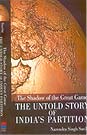
The Shadow of the Great Game: The Untold Story of India’s Partition

The Shadow of the Great Game: The Untold Story of India’s Partition
Narendra Singh Sarila

Harper Collins, 2005

Pages 436,
Rs. 500
ISBN 81-7223-569-0

The Partition of India ranks as one of the 10 greatest tragedies in human history. Numerous scholars have attempted to focus on the political processes that led to the vivisection of India, the creation of Pakistan. Hardly are there literatures that concentrate on the link between India’s partition and British intentions. Notable among them is Narendra Singh Sarila’s ‘The Shadow of the Great Game: The Untold Story of India’s partition’, which traces the influence of British strategic concern culminating in India’s Partition in 1947. In the light of certain rare documents, he ebulliently analyses a host of factors and forces that expressed British fears about USSR gaining control in the Middle East. This, he argues, compelled Britain to play what was called as ‘Great Game’ – a term coined by Arthur Connolly in 1840 and later popularized by Rudyard Kipling – against Russia.

Sarila has quoted chapter and verse to prove his point that Britain had deliberately planned the partition of India to protect its strategic and economic interests from the damaging consequences of its withdrawal from its vast empire in India. On June 3, 1947 the British foreign secretary Ernest Bevin, while addressing the British Labour Party’s annual conference said that the division of India “would help consolidate Britain in the Middle East”. The whole approach of Britain then was to retain at least some part of India, hopefully in the North-West “for defensive and offensive action against the USSR in any future dispensation in the sub-continent”. What is clear is that even if there was no Jinnah, Britain would still have sought to vivisect India. A free India, Britain knew, would not care to play second fiddle to London; but a Muslim-dominated Pakistan, was as Jinnah its vilest proponent frequently made clear, only too willing to do so. The British then trimmed their sails to follow the directions of the Muslim League’s winds. Every time there was talk of delegating authority, London insisted on consulting the League along with the Congress. It is interesting to note that the formation of the League was itself at the instance of British. When it was first established on December 30, 1906, in Dacca, the League acknowledged the debt in its first resolution by saying that it would “foster a sense of loyalty to the British Government among the Muslims of India”.


Britain tried very hard to influence the United States in its strategic scheming in favor of India’s partition. But the US President Roosevelt wanted to see a free and independent India—and not a partitioned India. American pressure exerted on Britain in favor of India’s independence from 1942 onwards is clearly revealed. The Americans also advised Britain to keep India united. They feared that India’s Balkanization would help the communists. However by playing the Pakistan card, Churchill portrayed that the problem lay in Hindu-Muslim differences and not in Britain’s unwillingness to accept self-determination for India. Such a move brought Jinnah’s 1940 scheme for Partition and his two-nation theory centre stage.


The conversations with, and written communications to, the Viceroys were meticulously recorded by the British which do not fully emerge from the Indian records. Scholarly attention has been riveted on those complex negotiations, and their minutiae, leading to partition as well as on the personalities of Gandhi, Nehru, Jinnah, Patel, and others, and a substantial body of literature also exists on the manner in which the boundaries were drawn between India and Pakistan, on the western and eastern fronts alike. The book also dwells on portraying the personalities of the British Viceroys in India - Lord Linlithgow, Lord Wavell and Lord Mountbatten – and how they were responsible for the events that ultimately led to the partition of India.


The book also reveals how novice was the Indian Nationalists’ miscalculations, their ideals divorced from realities and their inexperience in the field of international politics emerges in their own words in the records. Firstly, the resignation of Congress ministries when they were in power in 1939 enabled Jinnah and his Muslim League to come to the fore. Secondly Congress was reluctant towards supporting the war effort further alienated Britain from the Congress party. Thirdly, before the Muslim League had entered the Constituent Assembly, Nehru agreed to include League ministers in the Interim Government in 1946. Fourthly, glaring mistakes were made in handling the Kashmir imbroglio.


The author cautiously drives home the fact that though Britain was responsible for India’s Partition, it did not support the partition plan to weaken India. In fact the British forced the Princes into the arms of India, except for Jammu and Kashmir. This step helped unify the fragmented parts into a cohesive one. Partition, according to the author, was thus a politico-strategic act to consolidate their power in the region.


Fifty-eight years after Partition, it is worth re-examining whether the British fears of Russia marching into the subcontinent were valid. With the end of Cold War communist Russia did invade Afghanistan and take control of the country. This is where Pakistan played the role the British envisaged. It provided the launch pad for American forces to beat back the Russians by arming the Afghan resistance, precipitating the collapse of the USSR and altering the world balance of power.


It is a most welcome addition to books dealing with the partition of India even while making one wonder how many more secrets still remain to be unveiled!

Sunday, March 19, 2006

ELUSIVE PEACE IN THE CHITTAGONG HILL TRACTS


As the people in all walks of life all over Bangladesh are still reeling from the bomb attacks of 15 March, a huge cache of sophisticated arms have been discovered and seized at Naikongchhari Upazill in Bandarban district of the Chittagong Hill Tracts (CHT). The Rapid Action Battalion (RAB) of the Chittagong and Rajshahi zones and the Bangladesh Rifles (BDR) recovered latest model AK – 47 rifles, 7716 rounds of bullets of the rifles at the forest at Jaraliar Char in Naikongchhari. This entire scenario has led to the question as to what is happening in Chittagong Hill Tracts today?

Besides the rise in Islamic fundamentalism, the political and law and order situation in Chittagong Hill Tracts (CHT) have deteriorated alarmingly in recent times as the two main rival organizations of the region, Parbattya Chattagram Jana Sanghati Samity (PCJSS) and the United People’s Democratic Front (UPDF), and several groups of armed cadres are resorting to open confrontations. Abductions are being followed by kidnappings while murders are being avenged by gruesome killings. A total of 500 persons were killed, around 100 abducted and more than 1000 injured during the last five years in CHT. As many as 24 armed clashes between the activists of PCJSS and UPDF had occurred during the same period. Besides, the miscreants were engaged in gun battles with army men and police eight times during the last four months. The armed cadres of both PCJSS and UPDF had set fire to tribal villages and markets in remote hill areas of CHT. Sources said the activities of the rival political parties in CHT resulted in more than 60 gunfights in the last eleven months. Moreover many incidents of abduction took place in the CHT including the kidnapping of three foreigners from Naniarchar under Rangamati district on February 16, 2001.

Looking back into the history of the CHT problem, (which this article intends to do) it is interesting to note that the CHT was an autonomously administered district, in British administered India and was safeguarded by the Chittagong Hill Tracts Regulation 1900, which prohibited sale and transfer of land to non-indigenous people. The Chittagong Hill Tracts (CHT) in southeastern Bangladesh covers an area of approximately 5,093 square miles, and borders India to the north and Myanmar (Burma) to the east. After the partition of British India in 1947, the CHT was given to Pakistan. As part of Pakistan, the Chittagong Hill Tracts lost its special status and autonomy under an amendment to the Pakistan Constitution in 1963. Pressure for land to cultivate had in the past led to the migration of large numbers of non-tribal people from other parts of Bangladesh into the Chittagong Hill Tracts.

The government of Pakistan, in a bid to open up the hill tracts and tap its potential hydro-electric resources, constructed the Kaptai Dam in 1962 which submerged 54,000 acres - nearly 40 percent - of the best agricultural land, and displaced about 100,000 indigenous people. Prior to the creation of Bangladesh in 1971, the population of the area consisted almost entirely of people from 13 different indigenous tribes. Between 1964 and 1971, the Pakistan government amended Regulation 1 of the Act of 1900 to allow ‘migration of non-tribals into the hill tracts and transfer ownership of land and other resources of CHT to non-tribal people from the plains’. The emergence of Bangladesh in 1971 saw the projection of a homogenous Bengali nationalism, with the citizen of Bangladesh defined as a Bengali in the Constitution. No separate status or identity was recognised. This triggered the ethnic conflict in the Chittagong Hill Tracts.

The struggle was spearheaded by Chittagong Hill Tracts People’s Solidarity Association, which is called as Parbattya Chattagram Jana Samhati Samiti (PCJSS). Its armed wing, Shanti Bahini (peace force) was formed in 1972. As the struggle gathered strength, the government began relocating Bengalis in the CHT. Reports suggests that about ‘400,000 Bengalis were sent to the CHT, both to ease the pressure on the land in other parts of Bangladesh and to dilute the dominance of the hill people in CHT’. In 1975, when the struggle strengthened, nearly a third of the Bangladesh army was deployed in the CHT as the government looked for a military solution. As armed confrontation between the security forces and Shanti Bahini escalated, communal harmony between the tribals and 'new' Bengali settlers deteriorated further. Ten major massacres by Bengali settlers and the security forces since 1980, led to an exodus of the tribal population across the border to Tripura in India.

It is interesting to understand that successive governments in Bangladesh moved from a military solution to eventually calling for a political solution in 1987 when General Ershad initiated the first of six rounds of peace talks. These at times resulted in limited agreements between the two sides. One such agreement reached in 1985 between the Government of General Ershad and a breakaway faction of the PCJSS headed by Priti Kumar Chakma resulted in the surrender of some 300 fighters who accepted a rehabilitation package offered by the government, but was rejected by the PCJSS headed by J.B. Larma. Further meetings between General Ershad's Government and a committee representing elements from the Chittagong Hill Tracts, resulted in the establishment of three district elected councils in Rangamati, in Khagrachari and in Bandarban, each composed of a two-thirds tribal majority with a tribal chairperson. The councils, which continue to function, have limited administrative and supervisory authority over a number of government departments including Fisheries, Agriculture, Small and Cottage Industries, Public Health and Primary Education.

During these talks, the PCJSS presented the following five-point demand: Removal of non-indigenous peoples settled in the CHT after 1947; Withdrawal of all Bangladeshi armed forces from the CHT including non-indigenous police force; Retention of the CHT regulations of 1900 and a constitutional provision restricting its amendment; Autonomy for the CHT with its own legislature and recognition of Jumma nation’s right to self-determination; and Deployment of a United Nations peace-keeping force and implementation of these measures under the auspices of the UN. But the agreement of 1989 only provided for ‘limited autonomy’. It was largely rejected and armed insurgency continued.

The following year, in 1992, a multi-party committee composed of representatives from the Bangladesh National Party (BNP), the Awami League and Jamaat-e-Islami was constituted by the government to identify solutions to the CHT problem. In response, the PCJSS declared a unilateral cease-fire. Seven rounds of talks were reportedly held between the committee and the PCJSS (1992-96) under the aegis of the BNP-led government, but there were no concrete results.

In October 1996, Prime Minister Sheikh Hasina, following up on the previous dialogue efforts, set up the National Committee on CHT to reinitiate the peace process. The first meeting between the 12-member committee and the PCJSS was held in December, followed by other meetings. This was the last series of negotiations between the government and the PCJSS that ended in December 1997. Eventually, the talks resulted in the signing of a peace treaty on December 2, 1997 between the National Committee and the PCJSS in the presence of Prime Minister Sheikh Hasina. The signing of the accord without outside mediation was an important achievement for both the Bangladesh Government and the tribal representatives.

The accord addresses four major issues in the CHT, namely: Devolution of power to the Hill District Councils, Regional Councils and CHT Ministry as the units of self-government in the CHT; Establishment of a land commission to deal with conflicts over land and natural resource rights; Recognition of the cultural integrity of the indigenous peoples and the CHT as a ‘tribal’ area and the withdrawal of military forces from CHT and the de-commissioning and rehabilitation of JSS forces.

Although the government has amended existing laws to provide for the implementation of the peace accord, the accord is facing a number of difficulties, which require urgent and continued attention.

The first one is the slow pace of implementation by the government. Concern over this has been raised by the international community, by the human rights groups in and outside Bangladesh, and by the tribal people of the Chittagong Hill Tracts, at times threatening to derail the peace process altogether.

The second issue is that the accord is not recognized by the main opposition party, the BNP led by Begum Khaleda Zia. Although the process of achieving peace in the Chittagong Hill Tracts began at the time of the BNP government, the BNP has distanced itself from the accord which was finalized under the Awami League government, amid fears that should a future BNP government take office, it may seek to repeal the Awami League enacted legislation that uphold the accord. Begum Khaleda Zia, the then leader of the Opposition in Parliament and Chairperson of Bangladesh Nationalist Party (BNP), opposed the accord and called the accord a 'sell out'. However when the BNP came in to power in October 2001, it could not change this problematic state of the Peace Accord. One of the new government’s initial action with regards the CHT was the keeping of the portfolio for the Ministry of CHT Affairs with the Prime Minister, and the appointment of a non-indigenous person - from among the state sponsored settlers – and a BNP colleague as head of the CHT Development Board – which is blamed to be a step revealing of its indifference to the Jummas and the Peace Accord.

A third issue is the position of the disaffected political groups in the Chittagong Hill Tracts who consider the accord to have failed to respond to their aspiration of full autonomy. These include Pahari Gano Parishad (PGP or Hill Peoples Council), Pahari Chattra Parishad (PCP or Hill Students Council) and Hill Women Federation (HWF) who argue that the accord has failed to ''reflect the genuine hopes and aspirations of the peoples of the Chittagong Hill Tracts and has failed to fulfill the main demands of the Jumma people namely, constitutional recognition to the national ethnic minorities of the CHT with guarantee for Full Autonomy, restoration of traditional land rights, demilitarisation of the area, and withdrawal and resettlement of the Bengali settlers in the plain land.''


These perspectives have the potential to aggravate local issues and increase the tension between the CHT communities inherent in any post-conflict situations. They could affect questions relating to the withdrawal of the army from certain camps which, despite the provisions of the accord, has been only partially implemented; the possession of land which continues to remain unresolved; the CHT seats in the parliament which have traditionally gone to the national parties providing them with an effective vehicle to impose their own political agenda in the area which could now be at variance with the policies of the Regional Council; and the judicial processes which the tribal people are reluctant to use due to years of mistrust and which the more litigant non-tribal people could use to settle their differences with the tribal people.

In any case, there is concern that expectations in these regards have not been fulfilled. The post–accord grievances relate to the government’s failure to make the CHT a completely demilitarized zone, though the government has its own considerations in deciding to maintain army camps in the region. The tribals are also unhappy with the lack of full implementation of resettlement benefits for the returnees. Besides, there is dissatisfaction over the fact that the internally displaced persons have not been fully rehabilitated. This has led the situation in CHT more and more worse, and the common people are becoming gradually violent against the government policies. So if the CHT Accord is not implemented properly, the situation of CHT may turn into new directions in future.

In Bible, Isaiah prophesied that ‘we shall know peace when we see the lamb lie down with the lion’. It is expected to come true in any conflict situation. Only if the warring parties come together for a mutual agreement, shall we expect sustainable peace.

Wednesday, March 15, 2006

SRI LANKAN TIGERS

The world is watching. And none of us – Tiger or anti-Tiger – can do without the world. Even if we can dispense with its aid and assistance we have to ensure that our enemies do not benefit from such support. The Tigers need the world not to ban them; legal sanctions could impede the free flow of cash from the Diaspora to the LTTE's coffers; national and regional proscriptions could also interfere with the excellent support work various Tiger front organisations scattered throughout the world are doing for the Sun God's Cause.

The Sri Lankan state needs economic and military assistance from friendly nations. Both the Lankan state and the anti-Tiger Tamils need the world to adopt a zero-tolerant policy towards the Tigers, leading ultimately to full UN sanctions. So whatever we may feel about the world, all of us need the world in our corner or at least not in our opponent’s corner.

And the world demands certain standards. OK there is no equal treatment here; quite a few Western countries are openly pro-LTTE, but there are others who are more balanced. True these countries do not practice what they preach. When something threatens their interests (even non-vital ones) they do all the things they are constantly telling us not to do. So there is a lot of hypocrisy and double standards, which can be downright exasperating at times. Unfortunately we need these countries more than they need us; we need them to back us; or, at the least, we need them not to back our opponents. That is the reality; therefore, hard as it is, we must accept it and try to make it work for us.

There is little doubt that the United States of America is a major human rights violator, and has been one for more than a century. Unfortunately this issue is of little relevance to the struggle against the Tigers. What is relevant is that the USA is taking a fairly hardline against the LTTE; what is important is to ensure that the USA stays on (and if possible progresses further along) this anti-Tiger track. This means keeping the ban against the LTTE in place and getting the Americans to back a total EU ban as well as UN sanctions on the Tigers. These international steps are necessary to weaken the Tigers locally. These decisions taken tens of thousands of miles away can help save the lives of anti-Tiger Tamils (especially children) here.

So we have to remember that the world is watching – watching not only the Tigers but also the Lankan state and the anti-Tiger Tamils. If the Lankan state and the anti-Tiger Tamils indulge in or condone the kind of practices which are being cited as reasons to ban/impose sanctions on the LTTE, it is unlikely that the international community can be persuaded to adopt a harder line vis-à-vis the Tigers. After all, if all the major parties to the conflict are violating the basic rights of civilians, if all of them are acting anti-democratically, if the differences among them are not of quality but of quantity, not of nature but of degree, why should only one party be penalised?

The US State Department Report

The US State Department Human Rights Report for 2005 is critical of all three major parties to the Lankan conflict – the Tigers, the government of Sri Lanka and anti-Tiger Tamil rebels. Some will argue that the report is not even handed while others will contend that the report is supportive of their side, deliberately ignoring the less favourable comments. But such arguments and contentions are irrelevant in the final analysis. What is relevant is the message conveyed by the Report: international support and recognition will not come free but will be subject to conditionalities. And these include respecting the basic human and democratic rights of civilians, even when such civilians are known supporters of the enemy.

There is much that the anti-Tiger Tamils can learn from the Tigers. My Way can be very beguiling, but it does not come without a price tag. The Tigers had their way in killing Rajiv Gandhi but that murder antagonised India and thus caused many disadvantages to the LTTE. The Tigers’ ill treatment of fellow Tamils (from the murder of political opponents and child conscription to extortion, violation of voting rights and many other impositions, major and minor) has created a many an enemy to the Tiger cause from within the Tamil society, some of whom are committed to the destruction of the Tigers. In fact it is the LTTE’s violence towards fellow Tamils which has caused that organisation to be banned in a number of countries and may result in eventual UN sanctions. If the Tigers did not practice suicide bombings, if they did not target civilians in general, if they did not abduct children and treat their own Tamil people so abominably, they would not have been banned in any international capital. Fighting to decapitate Sri Lanka would not have been really regarded as a criminal matter by the international community; terrorism and child abuse cannot but be.

The Tigers' total disregard for the basic rights and well being of their own people has cost them much. Ironically this is a fate that can easily befall their opponents, be it the Lankan state or the anti-Tiger Tamils. That is the warning contained in the US State Department Report and we can ignore it, gloss over it, only at our own peril.

The Tamil/Tiger struggle for separation would not have reached the heights it did if it was not for Black July. That mass scale and bloody violation of the basic rights of the Tamil people, including the right to life, by Sinhala mobs, as the Lankan state watched supinely, shocked India and the world. It provided a raison d’ être for the Tamil struggle, for the demand for separation. The horrors of July were used by the Tigers subsequently to justify their own departure from civilisational norms and for their deliberate targeting of Sinhala civilians. Still the world was not much bothered; after all, the Tigers were imposing on the Sinhalese what the Sinhalese imposed on the Tamils in 1983 – collective punishment. It was all tragic, but what goes around does come around, as everyone knows.

The Tigers' downfall began when they turned against fellow Tamils. Infrequently, such practices can be ignored; but not when they become the norm. And these were becoming the norm by mid to late 1990'. No one was spared; actual enemies, potential enemies, opponents, those who merely supported opponents, old and young, men and women, the famous and the unknown – they all met the same fate at the hands of the Sun God’s executioners. And in some parts of the world, gradually, the pennies began to drop; you cannot say you are the liberators of the Tamils and then follow a consistent policy of murdering every Tamil who disagree with you on any matter, in any way. Sooner or later your credibility will wear thin.

Why Oppose The Tigers?

Raison d’être This is a question that the anti-Tiger Tamils too must answer – why are they opposed to the LTTE? Is it simply because they want to get what the Tigers enjoy – power over Tamil people? Or is it because they disagree with some specific policy/s or activity/s of the Tigers? If so these should be spelt out and reflected in the policies and the conduct of the anti-Tiger Tamils.

If the anti-Tiger Tamils oppose the LTTE because of the LTTE’s anti-democratic nature they themselves must respect democracy; otherwise their arguments against the Tigers would sound hollow. If the anti-Tiger Tamils oppose the Tigers because the Tigers murder political opponents, they themselves must not murder or harass their own political opponents. If you are critical of the Tigers because they violate the fundamental rights of the Tamil people, then you cannot yourself violate the fundamental rights of the Tamil people. If you oppose the Tigers in name but follow their ways in deed, then neither the support of the Tamil people nor the recognition of the international community is likely to come your way.

The Tigers did impose and continue to impose terrible penalties on the Tamils who oppose them. Did that end the Tamil opposition to the Tigers? The Tigers’ violence did drive some people out of politics and some out of the country; but many others stayed and fought back. The prospect of being killed turned R Sampanthan into a willing tool of the Tigers, but hardened the resolution of V Anandasangaree to oppose the Tigers. The cold blooded murder of Rajini Rajasingham Thiranagama did not silence all of her colleagues; the courageous work carried out by the UTHR is symbolic of man’s Promethean spirit, his indomitable will to resist. The killing of Reggie Master did not discourage his brother or the other young men who are waging a dangerous, lonely but relentless battle in the East against the LTTE. Suresh Premachandran became a Tiger cipher but Douglas Devananda and D Siddartan did not. If violent intolerance is all that effective the anti-Tiger Tamils cannot exist. But they do.

And they should learn the lesson of their own example. Using violence to silence opponents is not only morally wrong; it does not work, even in the medium term. With violence you can silence some of your opponents all the time and all of your opponents some of the time; but not all of your opponents all the time.

Respect for democracy makes sense because in the final analysis it benefits not only the receiver but also the giver. When political pluralism prevails you have vociferous opponents but rarely bitter enemies, intent on mutual extermination. The unrelenting hostility that exists between the Tigers and the anti-Tiger Tamils is possible only in an anti-democratic context characterised by total intolerance. If the Tigers had a democratic and non-violent way to deal with dissidents, the Karuna rebellion would not have taken the trajectory it did. Despite all their sordid mistakes and repulsive antics the Southern parties have better ways of dealing with opposition and dissension. Because of the overall democratic context in which these parties operate the opponent of today can well become the supporter of tomorrow or vice versa. Ranil Wickremesinghe and any JVP parliamentarian can share a joke in the parliamentary lobby or sit together and converse amicably at a public function. There is definitely more than a degree of hypocrisy involved in such conduct but it is safer that way from a political and a societal point of view than the alternative.

The Tiger cannot be democratised. But to the degree possible the anti-Tiger Tamils must democratise themselves. A good place to begin would be by being unlike the LTTE. The Tiger way might seem a success but after three decades of fighting the LTTE does not have a liberated zone worth talking about. The Tiger way has also earned for the Tigers the undying enmity of a considerable number of Tamils. And whenever the anti-Tiger Tamils feel drawn to the path of total intolerance of the Tiger, the best antidote is to look at the nearest mirror.